⚡ Quick Answer — Nidhi Shrimali
A Parad Shivling is a Shivling made of mercury that has been bound into a solid with other metals. Tradition treats it as a direct form of Shiva and values it for daily worship, Shravan and Mahashivratri. Its puja is simple: water, raw milk, bel patra and "Om Namah Shivaya". Mercury is toxic, so never heat it, never drink its abhishek water, and keep it away from children.
Table of Contents
- What Is a Parad Shivling?
- Why Mercury Is Linked to Shiva
- Parad Shivling Benefits: What Tradition Says
- Mercury Shivling vs Narmadeshwar and Sphatik
- Parad Shivling Kaise Pehchane: Genuine vs Fake
- Tests You Should Never Do
- How to Choose the Right Piece
- Which Parad Form Suits Your Home
- Installing a Parad Shivling at Home
- Parad Shivling Puja Vidhi, Step by Step
- What "Energised" Means
- Safety Rules for a Mercury Shivling
- Common Mistakes
- When to Ask About Your Kundali First
- What a Parad Shivling Cannot Do
What Is a Parad Shivling?
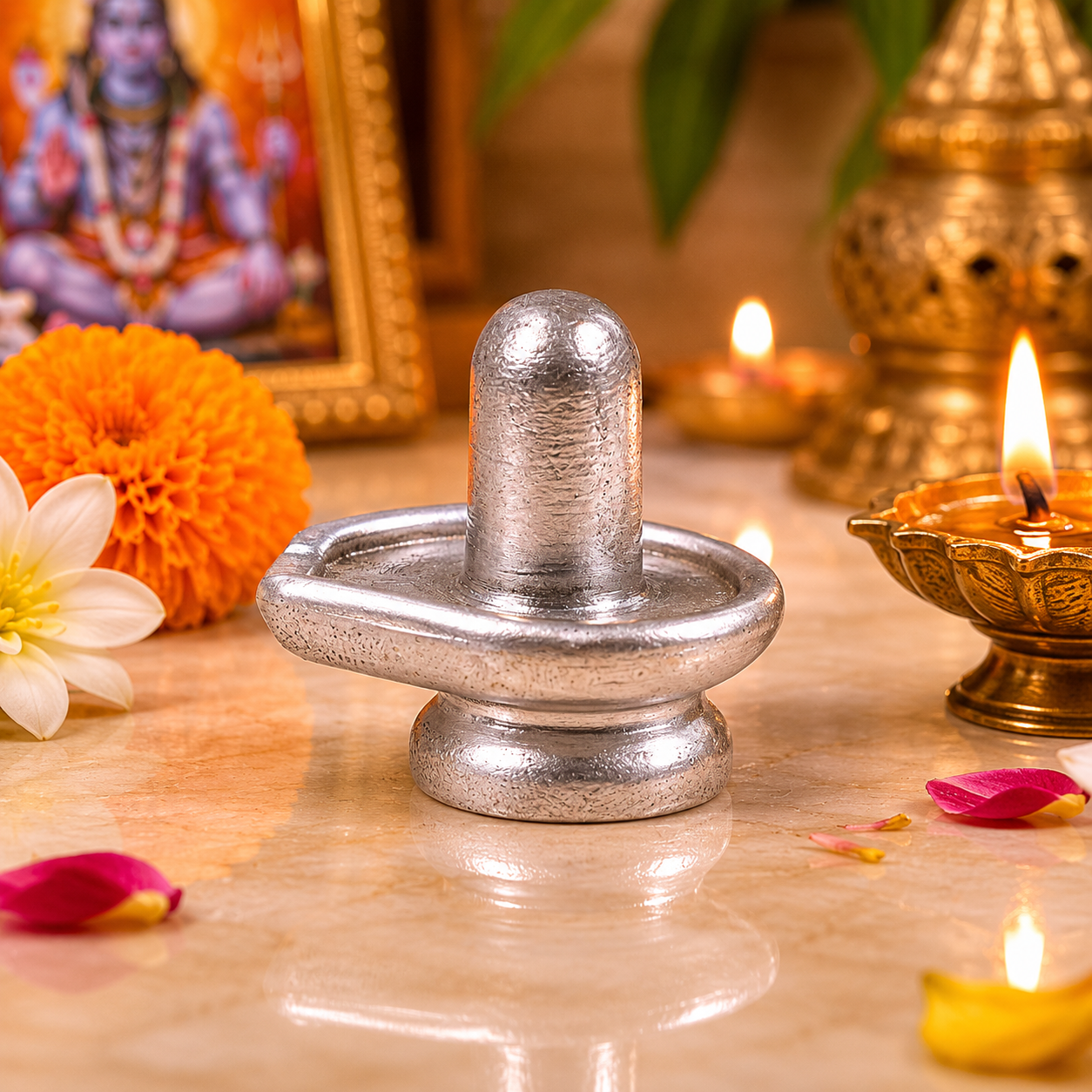
Parad (पारद) is the Sanskrit name for mercury. At room temperature mercury is a liquid, so it cannot be shaped on its own. To make a Shivling, craftsmen bind the mercury with other metals until it becomes a hard, silver-grey solid that holds a shape. In the Rasa Shastra tradition this binding is called bandhan, and a piece made this way is called a Parad Shivling, Parad Lingam or Mercury Shivling.
A finished piece is bright and silvery when new, dulls slightly with handling, and is heavy for its size. It is sold by weight, not by height, because weight tells you how much metal it contains. Our Parad Shivling comes in small, medium and large weights, and the full range of idols, yantras and sets is on the Parad collection page.
Why Mercury Is Linked to Shiva
In Rasa Shastra, the old Indian science of metals and medicines, mercury holds the highest place. The tradition regards mercury as the essence of Shiva and sulphur as the essence of Parvati. That belief is the root of the Parad Shivling: a linga made from the substance that the tradition already equates with Shiva himself.
This is why devotees often say a Parad Shivling is worshipped "as Shiva" and not only as a symbol of him. You will hear claims that one Parad Shivling equals the worship of many crores of Shivlings, or that it removes every dosha. I do not repeat those claims as fact. They are expressions of reverence found in devotional writing, and the honest way to read them is as praise, not as a measurable promise.
Parad Shivling Benefits: What Tradition Says
These are the benefits that tradition and practising families describe. They are matters of faith, and I state them that way.
- A fixed point for daily worship. A Shivling on the home altar gives the day a two-minute beginning: water, a mantra, a moment of quiet. Most of what people describe as the benefit of any Shivling comes from this regularity.
- Durability. A well-bound Parad Shivling does not chip like crystal or wear like marble. A good piece can serve one family for decades.
- Shravan and Mahashivratri worship. Many families bring a Parad Shivling home for these observances and keep it as the permanent linga afterwards, in place of a clay Parthiv Shivling that is immersed after the puja.
- Japa and meditation. A small Parad piece in front of you during Mahamrityunjaya or Panchakshari japa is a traditional focus for the mind.
- Astrological use. Astrologers often suggest Shiva worship when the Moon is afflicted in a chart or during a difficult Saturn period. That advice is about worship. It does not require Parad in particular.
Mercury shivling benefits are sometimes sold as quick fixes for money or health. They are not. What the tradition offers is a form of worship, and the worship is what you bring to it.
Mercury Shivling vs Narmadeshwar and Sphatik
Three kinds of Shivling are common in homes. Each suits a different household, and none is "stronger" than the others.
| Point | Parad (mercury) | Narmadeshwar (river stone) | Sphatik (quartz crystal) |
|---|---|---|---|
| Material | Mercury bound with other metals | Natural stone from the Narmada | Natural clear quartz |
| Sold by | Weight in grams | Height in inches | Height and clarity |
| Pran pratishtha | Customarily done, or bought already consecrated | Commonly skipped, regarded as svayambhu | Customarily done |
| Abhishek | Water and milk; the water must not be drunk | Water, milk, curd, honey, all safe | Water mainly; rinse well after milk |
| Handling | Toxic metal: wash hands, no heat, away from children | Very forgiving | Brittle; chips if dropped |
| Best for | An adult with a fixed daily routine | A first Shivling for most families | Japa, meditation, light abhishek |
If you are choosing your first Shivling and the house has small children, I usually suggest a stone one. The reasons are set out in the Narmadeshwar Shivling guide, and the crystal option is covered in the Sphatik Shivling guide. If your routine is steady and an adult will handle the piece, Parad is a good choice.
Parad Shivling Kaise Pehchane: Genuine vs Fake
"Parad shivling kaise pehchane" is the question I hear most from buyers, because the market is full of pieces that contain little or no mercury. The common fakes are cast from tin, zinc, lead or aluminium alloys and polished to look silver. No home test is proof, but together these checks rule out the obvious substitutes:
- Weight for its size. Mercury is one of the densest metals there is, far denser than tin, zinc or aluminium. A real Parad Shivling feels surprisingly heavy in the palm. A piece that feels light for its size is almost certainly mostly tin or zinc.
- The paper rub. Rub the base gently on plain white paper. Soft lead and tin alloys tend to leave a grey or black streak. A well-bound Parad piece usually leaves little or none. This is a sign, not proof.
- Colour over time. Genuine Parad dulls to a soft grey with handling and can be brightened by a gentle wipe. Plated pieces show a different metal under the surface where the coating wears.
- Seams and bubbles. Cheap castings often show a mould line or pinholes. A well-made piece has an even surface.
- Ask for the mercury percentage. An honest seller will tell you roughly how much mercury the piece contains and what it is bound with. A seller who says "100% pure mercury" for a solid piece is not telling you how it was made, since pure mercury is liquid.
- Get an XRF reading if the piece is costly. Many gold-testing shops have an XRF machine that reads the metals in an object without damaging it. Mercury shows up on that reading. For an expensive purchase this is the only check I would call reliable.
Price is a signal too. A large Parad Shivling sold for very little cannot contain much mercury, because the metal itself costs money.
Tests You Should Never Do
Some advice found online is dangerous, and I want to be plain about it.
- Never heat it. The "put it on a flame and see if it smokes" test releases mercury vapour, which is the most harmful way mercury enters the body. Do not do it, and do not let a seller do it in front of you.
- Never boil it. Boiling it in water or milk to "check" or "purify" it carries the same risk.
- Never scrape or file it. Filings and dust from a mercury alloy should not be handled or breathed.
- Never taste or swallow anything from it. That includes the abhishek water.
If a piece has ever been heated, cracked open or is shedding silver droplets, do not keep it in the home temple. Close it in a sealed glass jar and ask your local municipal body how to dispose of mercury waste.
How to Choose the Right Piece
Once you have decided on Parad, four choices remain.
Weight. The home-temple tradition prefers a small Shivling, and Parad is no exception. A small piece of a few dozen grams is enough for a shelf temple and is the easiest to handle safely. Heavier pieces suit a separate puja room. Our Parad Shivling is offered in three weights, and the Parad Lingam is a single mid-weight piece.
Form. Most families choose a plain linga. A five-faced Parad Panchmukhi Shivling is worshipped too, and some devotees prefer it for the image of Shiva's five aspects. The plain form is easier to wash and wipe dry.
Base. A Parad Shivling stands on a small base or in a jaldhari that carries the water away. If you want the base and the linga matched, the Parad Shri Yantra Shivlingam combo has a jaldhari built in.
Seller. Choose one who states the weight range, answers questions about the metal, and does not attach promises of money or health to the sale.
Which Parad Form Suits Your Home
Parad is made into more than Shivlings. These are the forms people ask me about, matched to the purpose families usually have in mind:
| If you want | Parad form | Note |
|---|---|---|
| A permanent linga for daily abhishek | Parad Shivling | Start with the small weight |
| The five aspects of Shiva in one image | Parad Panchmukhi Shivling | Plain linga is easier to clean |
| Nandi facing the linga, as in a temple | Parad Nandi | Place it facing the Shivling |
| The whole Shiv Parivar on the altar | Parad Shiv Panchayat set | For darshan and aarti; abhishek on the linga |
| Lakshmi worship alongside Shiva | Parad Shri Yantra | See the Sri Yantra guide for placement |
| Ganesha and Lakshmi for Diwali puja | Parad Laxmi Ganesh | Kept with the main deities, not in place of them |
One linga per home temple is the usual rule. If you already have a Narmadeshwar or an inherited Shivling, worship that one and add a Parad Nandi or yantra if you wish, rather than a second linga. Every piece is listed with its weight on the Parad collection page.
Installing a Parad Shivling at Home
A Monday, a Pradosh evening, a day in Shravan or Mahashivratri are the days families traditionally choose to bring a Shivling home. Check the exact date in your local panchang, since tithis shift with location.
- Place. The puja area, ideally the north-east of the home. A raised shelf or chowki, never the floor, and never the bedroom.
- Direction. Set the jaldhari so its spout points north. Sit facing east or north while you worship.
- Base. Keep the Shivling on its own base or a small plate. Do not let gold jewellery touch it, since mercury and gold react.
- Height. Put it where small children and pets cannot reach it.
- Pran pratishtha. Unlike a Narmadeshwar, a made Shivling is customarily consecrated. Many families have their priest do it. If the piece was consecrated before dispatch, a simple sankalp on the first day is enough by common practice. Follow your family custom where it differs.
Parad Shivling Puja Vidhi, Step by Step
The daily puja takes a few minutes. This is the order most households follow:
- Prepare. Bathe, sit facing east or north, and light a ghee or oil lamp to one side, not close to the Shivling.
- Sankalp. Hold a little water in the right palm, say your name and what you are praying for, and let the water fall in a plate.
- Jal abhishek. Pour clean water over the Shivling in a thin stream while saying "Om Namah Shivaya" 11 or 21 times.
- Milk on Mondays. On Mondays, or in Shravan, pour a little raw milk and then rinse with clean water so nothing is left on the metal.
- Offerings. Bel patra (stem facing you, smooth side down), white flowers, sandalwood paste and a few grains of rice. The method for bel patra is in how to offer bilva leaves.
- Mantra japa. One mala of the Panchakshari mantra, or the Mahamrityunjaya mantra if that is your practice. The meaning and pronunciation are in the Shiva Panchakshari mantra guide.
- Aarti and quiet. Wave the lamp, then sit for a minute without asking for anything.
- Clean up. Collect the abhishek water and pour it into a plant pot or garden soil, not a drinking-water source. Wipe the Shivling dry with a soft cloth and wash your hands.
Tulsi, ketaki flowers, turmeric and kumkum are traditionally not offered on a Shivling. For the fuller Monday or Shravan abhishek with panchamrit, see the Rudrabhishek at home guide. With Parad, rinse each liquid off with water and never drink any of it as prasad.
What "Energised" Means
Many sellers, us included, describe Parad pieces as energised. In practice this means the piece has been through pran pratishtha or a mantra ritual before dispatch. It is a religious act done in good faith. It is not a property you can test, measure or see, and it does not change what the piece will do for you.
What keeps a Shivling alive in the tradition is the worship it receives after it reaches your home. A piece that receives water every morning has, in the tradition's own terms, more life in it than an expensive "siddh" piece that sits in a cupboard. If a seller asks a large premium for special energising with a promised result, decline.
Safety Rules for a Mercury Shivling
A well-bound Parad Shivling is stable at room temperature and is handled by many families without trouble. The rules below keep it that way.
- Do not drink or sprinkle the abhishek water as charanamrit. Pour it into soil.
- Wash your hands after touching the Shivling, before eating or touching your face.
- Keep it away from flames, the stove, direct sun on a hot windowsill, and anything that heats it.
- Keep it out of reach of children and pets. It is a puja object, not a toy or a paperweight.
- Pregnant women may prefer to let another family member do the handling.
- If the surface ever flakes or sheds liquid droplets, stop using it, seal it in a jar and dispose of it through your local authority. Do not vacuum spilled mercury.
If your family also offers black sesame on Mondays or Saturdays, the Hindi article on offering kale til on the Shivling explains that practice. With Parad, rinse the sesame off with water afterwards, as with milk.
Common Mistakes
- Buying by height instead of weight. Two pieces that look the same size can differ greatly in metal. Ask for grams.
- Believing "100% pure mercury". A solid piece always contains a binding metal.
- Testing with fire. Covered above. Never.
- Keeping two lingas. One Shivling per home temple is the common rule.
- Buying out of fear. If someone has told you that only a Parad Shivling can save you from a dosha, look at the chart itself before you spend anything.
- Leaving it unattended for weeks. A home Shivling should receive water on most days. If that is not possible, worship at a temple until it is.
When to Ask About Your Kundali First
Shiva worship is a general practice that suits almost anyone, and you do not need a chart reading to keep a Shivling. A reading helps when you are buying it as a remedy for something specific, such as a troubled Moon, Sade Sati or a delay you have been told is planetary. In that case the question is not "which Shivling" but "is Shiva worship the right remedy at all, and what else is running in my chart".
A Kundali Vishleshan consultation looks at the whole chart and tells you which remedies are worth your time. Sometimes the answer is a Parad Shivling. Often it is a simpler practice you can start today.
What a Parad Shivling Cannot Do
A Parad Shivling is an aid to devotion. It does not cure illness, clear debt, fix a marriage or guarantee any result, and no weight or level of purity changes that. If you are unwell, see a doctor first, and let worship stand beside the treatment, never in place of it. If you are anxious or low for weeks at a time, speak to a doctor or counsellor as well as to your priest.
A more expensive piece is heavier or better made. It is not more powerful. A small Parad Shivling that receives water every morning, handled with care, serves a household better than a large one bought on a promise.
मुझे आशा है कि इस लेख से आपको पारद शिवलिंग की पहचान, पूजा विधि और सावधानियाँ समझ आई होंगी। भोलेनाथ की कृपा आप और आपके परिवार पर बनी रहे। शुभकामनाओं सहित,
Nidhi Shrimali
Chief Astrologer, Pandit NM Shrimali
🎯 See the Parad Collection
Every Parad Shivling, idol and yantra is listed with its weight and current price on the Parad page. If you are unsure which weight suits your altar, send a photo of the space on WhatsApp.
👉 Shop Now: www.panditnmshrimali.com/categories/parad
📱 WhatsApp: +91-8955658362
Disclaimer: This article is for educational and spiritual purposes only. The benefits described are traditional beliefs, not guaranteed outcomes. Mercury is toxic; follow the safety notes above. Consult qualified professionals for medical, legal or financial matters.
Remedy items from our store
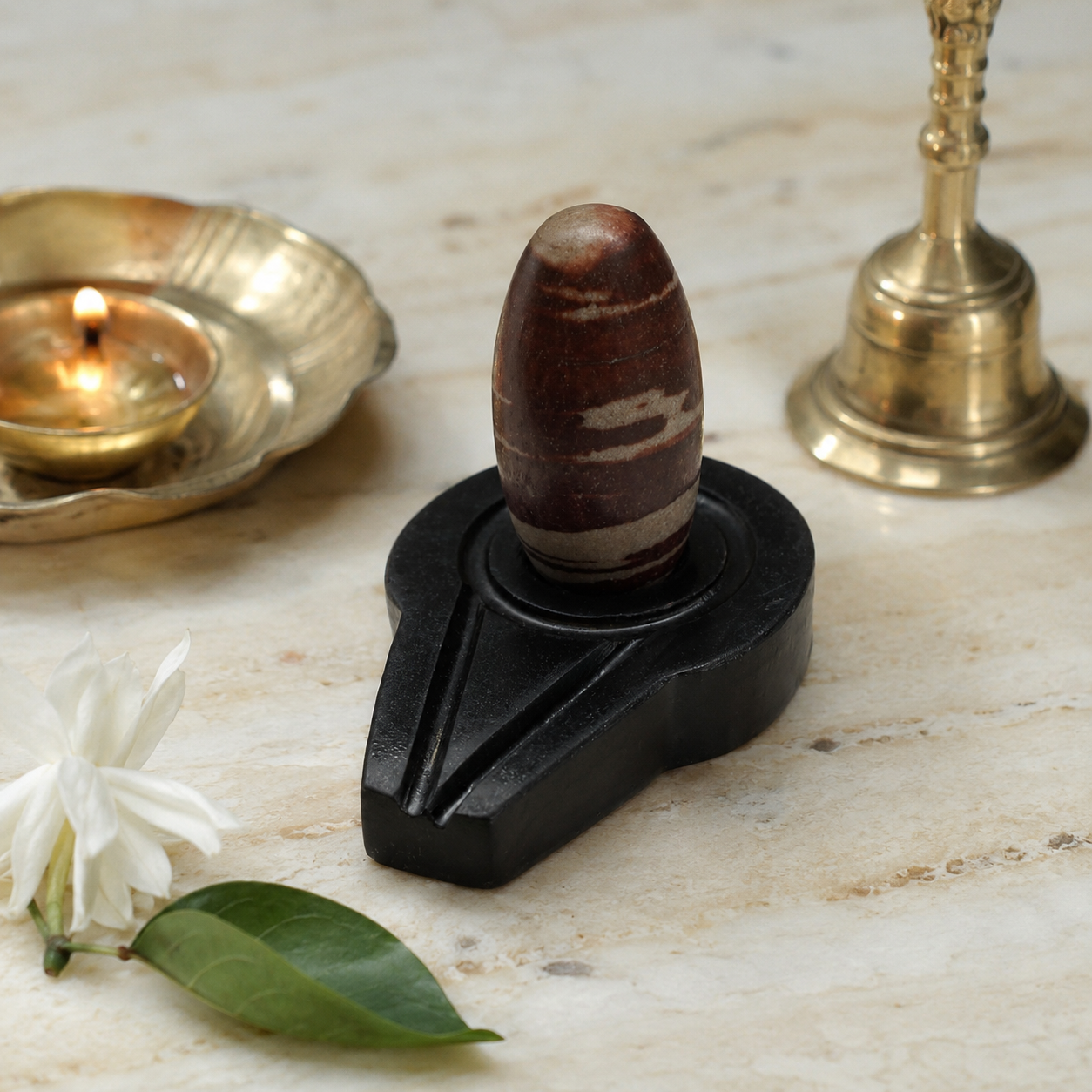
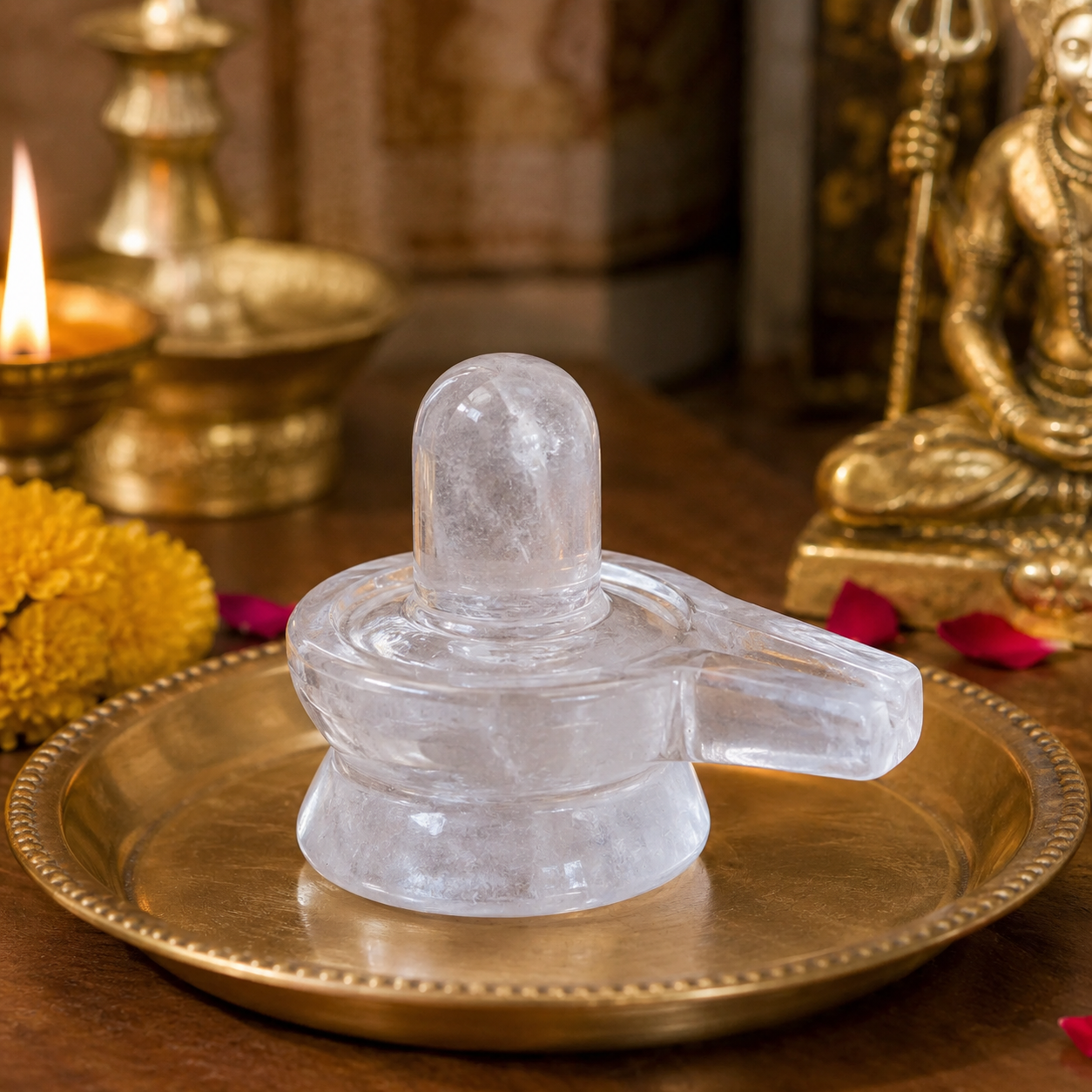
Traditionally used with the remedies in this article. Certified and energized before dispatch. If you are unsure which one suits your chart, our astrologer can check your Kundali before you choose.
Ready for expert guidance?
Get Personalized Guidance from Nidhi Shrimali
Every consultation is a one-on-one telephonic session with Astrologer Nidhi Shrimali. Get detailed Kundali analysis, dosha identification, and personalized Vedic remedies.
Frequently Asked Questions
What are the benefits of a Parad Shivling?+
Parad shivling kaise pehchane? How do I identify a genuine one?+
Is it safe to keep a mercury Shivling at home?+
Can I do a heat or flame test on a Parad Shivling?+
What is the puja vidhi for a Parad Shivling?+
Does a Parad Shivling need pran pratishtha?+
Which is better for home, Parad or Narmadeshwar Shivling?+
Written by
Nidhi Shrimali
Vedic Astrologer
Nidhi Shrimali is a Vedic astrologer with 18+ years of experience specializing in Kundali Vishleshan, Kundli Milan, Vastu Shastra, and Numerology. 1,425+ Google reviews, 4.8 rating. Based in Jodhpur, Rajasthan.